
Last updated November 16, 2026
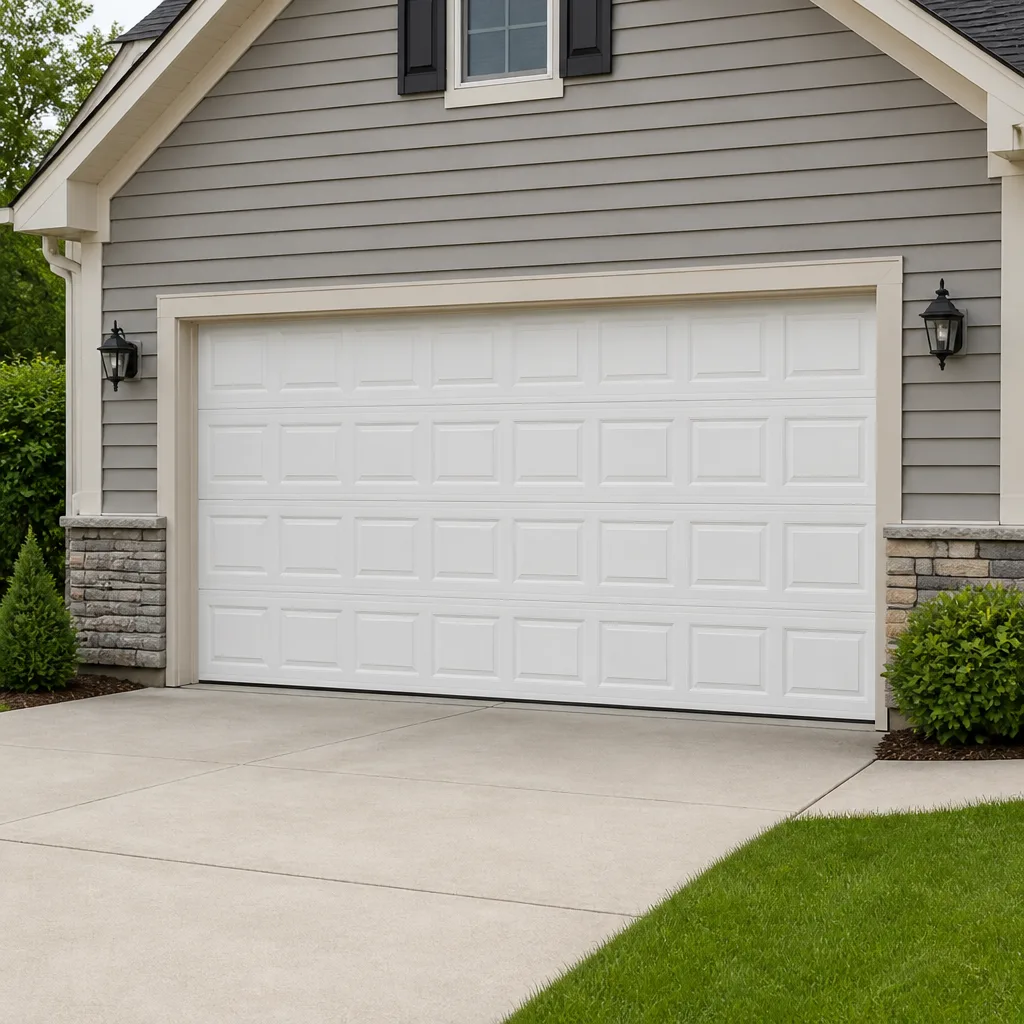 Raised-panel steel
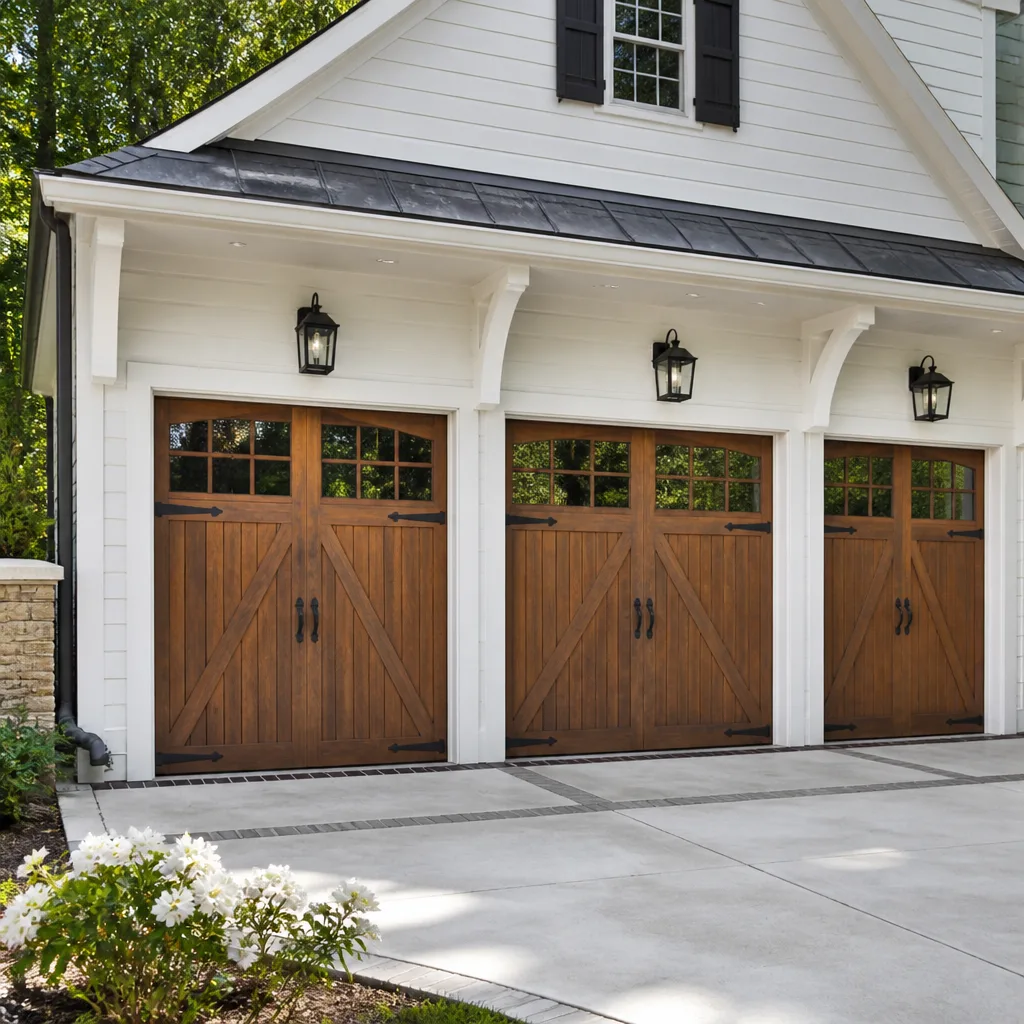 Carriage house
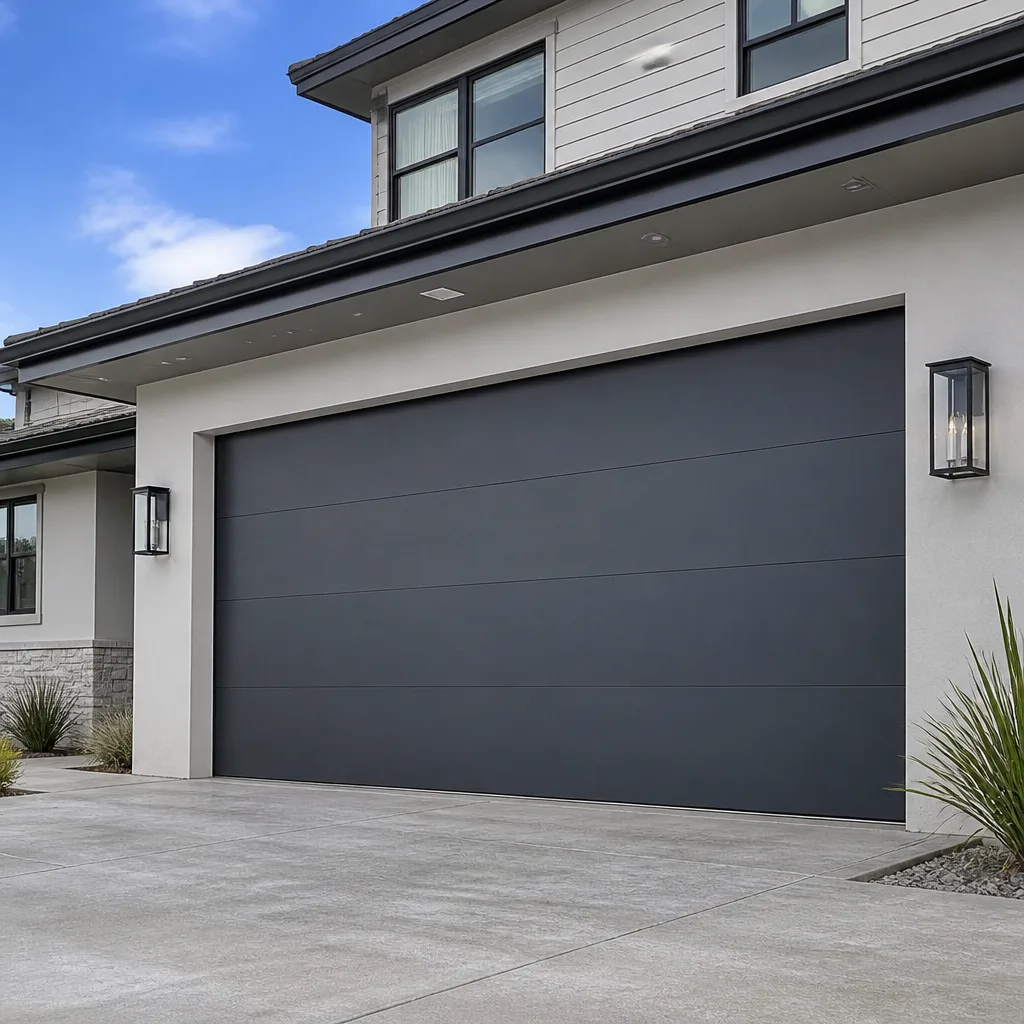 Modern flush
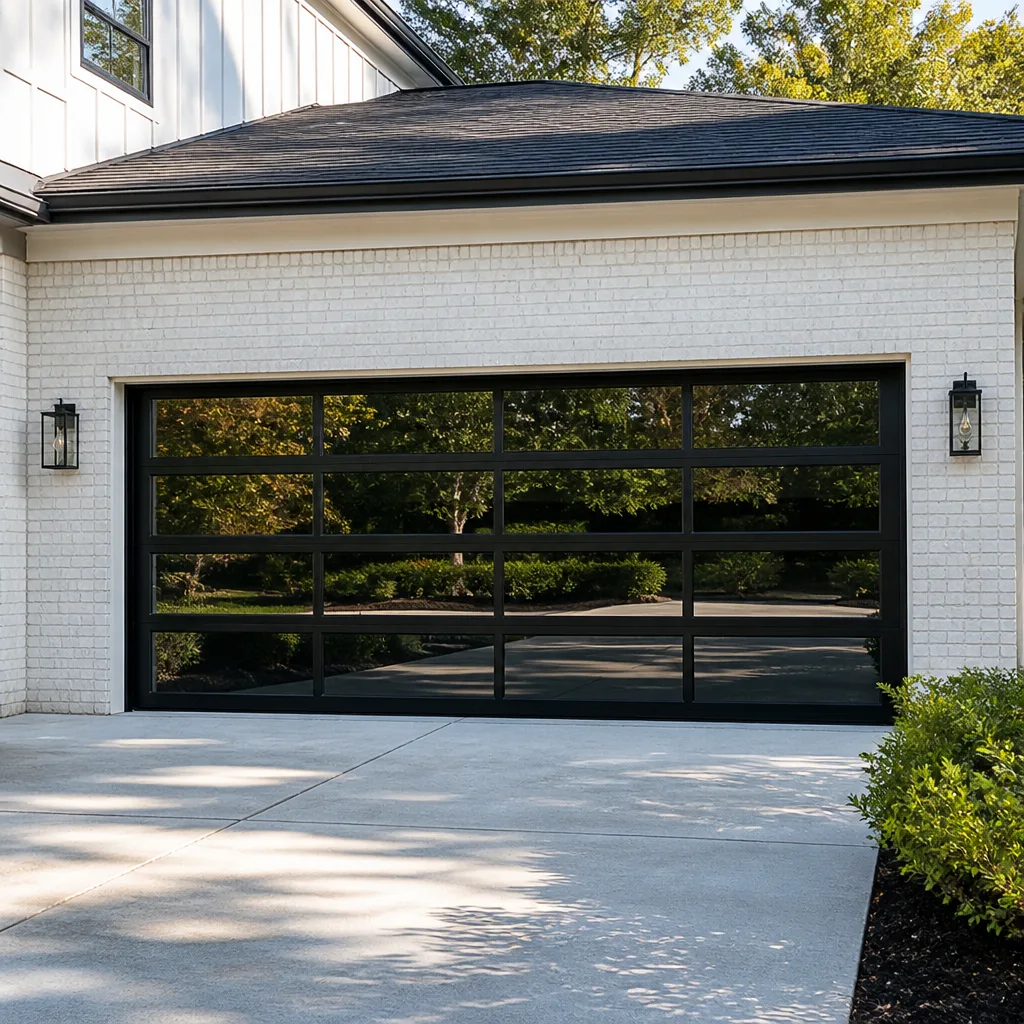 Full-view glass
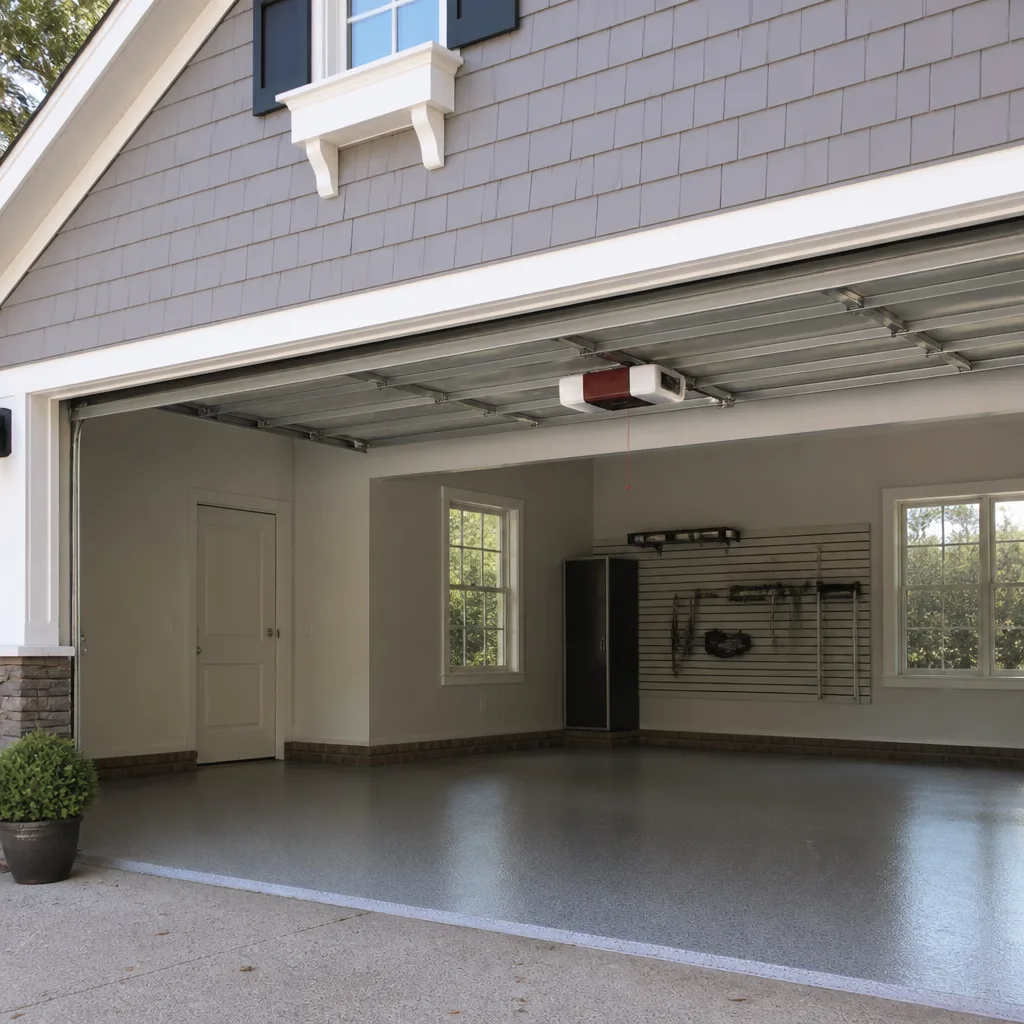 LiftMaster openers
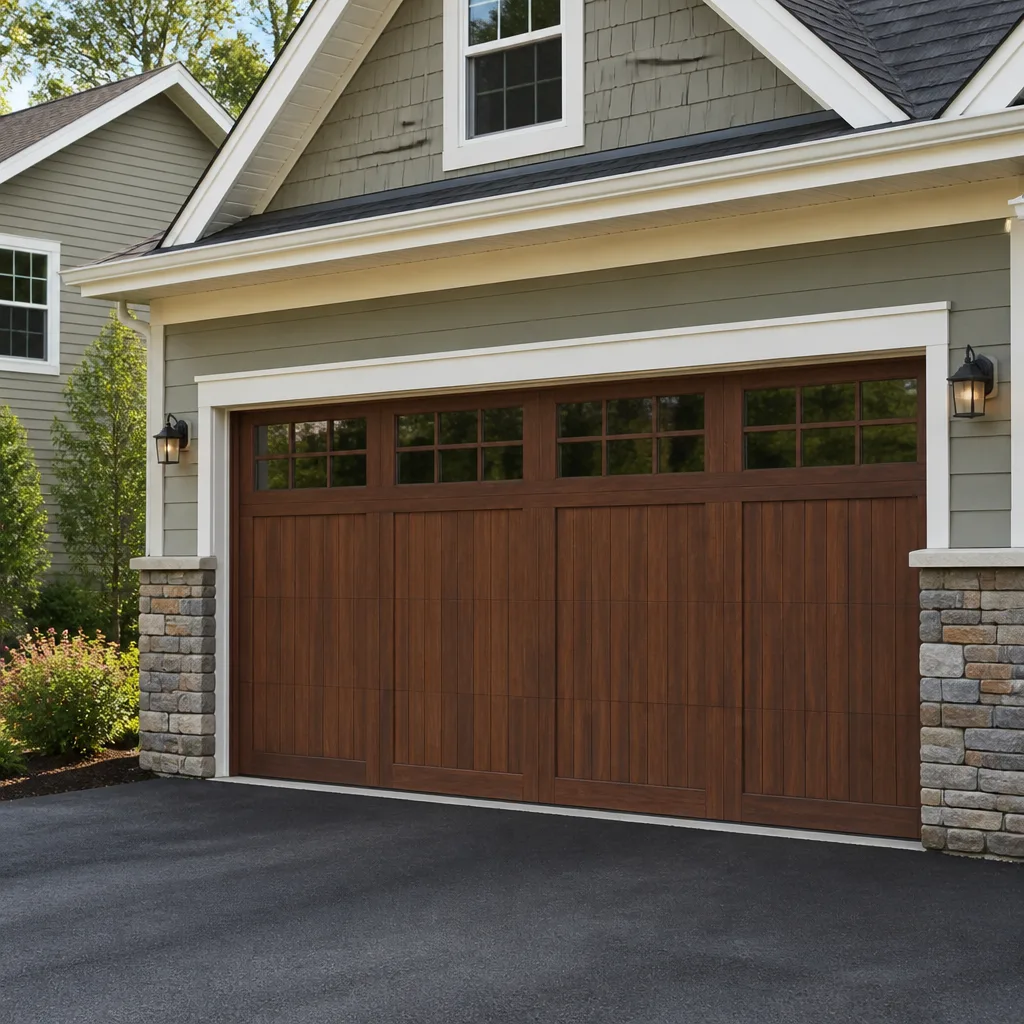 Chamberlain openers
Full 25-point door and opener safety check with every visit - springs, cables, rollers, tracks, and your LiftMaster or Chamberlain opener included
You get a price before we start. It does not change when the pro arrives.
Get your free estimateGarage Door Repair Troubleshooting in Alexandria: Common Problems and How to Fix Them
Most people diagnose their garage door with a guess. The door won’t open, so it must be the spring. The opener hums and nothing happens, so the motor is shot. Both conclusions are often wrong. A door that refuses to lift can be a dead trolley carriage, a bound roller, a tripped logic board, or a torsion spring that snapped three seasons ago and finally finished separating. Each one has a different fix and a different cost. This guide is organized around behavior, not part names, so you can read what the door is actually doing and narrow the cause before anyone touches a tool. We’ve worked on doors across Alexandria long enough to know that symptoms change with the seasons here, and that changes what we look at first.
Quick Answer
Garage door troubleshooting in Alexandria starts with three questions: does the door move at all, does the motor run, and what does the door do when it moves? Answer those and you’ve already split the likely causes by more than half. Genuinely safe fixes are limited to the safety eye beam, the wall switch, remote batteries, and clearing a track obstruction – everything involving springs, cables, and electrical panels needs a trained technician. Reading the failure mode before you call is the fastest way to a correct diagnosis and a fair estimate.
Styles & brands we work with
- Raised-panel steel
- Carriage house
- Modern flush
- Full-view glass
- LiftMaster openers
- Chamberlain openers
Table of Contents
- Start With a Decision Tree, Not a Guess
- Partial Failure vs. Full Failure: What the Difference Tells You
- Trolley Carriage or Broken Spring? The Tests That Tell Them Apart
- Why Alexandria’s Soil Makes Doors Go Out of Alignment
- Reading the Noise: What Each Type of Sound Points To
- What’s Safe to Check Yourself and What Isn’t
- How to Describe the Problem So a Technician Can Diagnose It Fast
- Brand-Specific Clues: LiftMaster, Craftsman, Wayne Dalton and Raynor
Start With a Decision Tree, Not a Guess
Every garage door fault falls into one of three zones: the door itself, the opener, or the point where they meet. Working through them in order stops you from replacing a spring when the real problem is a stripped gear in a twelve-year-old opener, or replacing an opener when the real problem is a bent track.
Here’s the sequence we use:
- Watch the door, not the ceiling. Press the wall switch and look at the door panel, not the opener unit. If the door twitches but doesn’t lift, the motor is likely working and the door is the problem. If the door doesn’t move and there’s no sound, the power or logic board may be the problem.
- Listen at the unit. A single click suggests the opener is receiving the signal but not engaging. A continuous hum with no movement suggests the gear and sprocket assembly. Silence points to a tripped breaker, dead board, or disconnected safety beam.
- Check the trolley. With the door closed, pull the manual release cord. If you hear the carriage slide freely and the door opens with normal hand effort, the door is fine and the fault is in the opener. If the door is heavy and stiff with the trolley released, the fault is in the door.
- Test the door by hand. With the opener disconnected, lift the door a few inches. A properly balanced door holds position roughly halfway up. A door that drops or feels extremely heavy points to a spring, cable, or balance issue.
- Check the safety eyes. Look for a steady light on each photo eye above the floor. A blinking light is a beam fault, and that’s the most common reason a modern opener refuses to close.
That’s five checks in under a minute. They won’t cover every scenario, but in Alexandria they cover the vast majority of calls we get. Working through them first, whether you fix anything or not, means you’re describing an accurate failure rather than a guess.
Partial Failure vs. Full Failure: What the Difference Tells You
A door that goes up halfway and reverses is a different animal from a door that won’t move at all. Partial failures tend to be sensor, limit-set, or alignment issues. Full failures tend to be mechanical or electrical. Lumping them together is where most DIY diagnosis goes off the rails.
Partial failures – door moves but stops or reverses:
- Reverses a few inches off the floor: almost always the safety beam. One eye may be misaligned, dirty, or receiving glare from a garage light. Wipe both lenses with a dry cloth and check for anything blocking the line between them. A hanging bike handle or a fallen leaf is enough.
- Reverses two-thirds of the way up: the open limit switch is likely set wrong, or the door is binding on a track at that height. Try opening it by hand to that exact height. If it binds, the problem is the door. If it moves freely, the problem is the limit.
- Stops short and holds: a limit-set problem or a weak opener motor on a heavy door. This is a common symptom we see on Craftsman openers past the ten-year mark.
- Opens then lowers halfway and stops: often the close-force setting. Look for a small adjustment knob or dial on the unit; a door that needs more force than usual to close is often telling you a roller or hinge is failing.
Full failures – door doesn’t move at all:
- Nothing happens, no sound: power, board, or safety beam
- Click, no movement: capacitor, gear, or a jammed trolley
- Hum, no movement: gear and sprocket assembly or a stripped drive
- Manual door is heavy and the opener is fine: spring, cable, or balance issue in the door
In our experience, the “door won’t open at all” call is the most misdiagnosed. About a third of the time the opener is completely fine and the door is the problem; another third, the door is fine and the opener has failed. The rest split between sensor, wiring, and power. That’s why the trolley release test matters so much. It takes ten seconds and answers the question directly.
Trolley Carriage or Broken Spring? The Tests That Tell Them Apart
These two failures produce nearly identical complaints: “the opener runs but the door doesn’t move.” The causes are completely different, and one of them is a genuine safety hazard. Here’s how to tell them apart without touching either component.
First, release the trolley. Every opener has a red manual release cord hanging from the carriage. Pulling it disconnects the door from the opener drive without dismantling anything. This is safe to do with the door closed and the opener off.
Once the trolley is released:
- Run the opener again from the wall switch. If the carriage runs smoothly along the rail without the door, the trolley is fine and the door is the problem. If the carriage doesn’t move or the opener hums without moving the carriage, the fault is inside the opener.
- Lift the door by hand from the closed position. This is where you find the spring. A door with a broken torsion spring feels impossibly heavy, like lifting a car hood with no struts. A door with a broken extension spring may feel heavy on one side and light on the other.
- Look for the gap. Torsion springs live on a shaft above the door header. A broken spring shows a clean gap somewhere along its coil, usually after the spring has fully unwound. Don’t put your hand up there to check – use a light and look.
- Check the tension. If the torsion springs are intact and the door still feels heavy on both sides, the springs may have lost their tension over time. That’s a technician job, because the tensioning process requires winding bars and specific torque knowledge.
Here’s the part that matters: do not attempt to fix a spring, cable, or the torsion shaft yourself. A torsion spring under tension can release with enough force to break bones, and cables under load can whip unpredictably. That’s why the tests above stop at observation. If the door is heavy and the trolley runs freely, you’ve found your problem – call a technician. If the trolley doesn’t run, the opener is the issue and that’s much safer to work with.
Why Alexandria’s Soil Makes Doors Go Out of Alignment
Alexandria sits on clay-heavy ground that swells when wet and shrinks when dry. That clay movement is seasonal, it affects the foundation slabs under garages, and it throws garage doors out of alignment in ways homeowners almost always blame on the opener.
The mechanism is straightforward. A garage slab rides on the soil beneath it. When the soil absorbs water, it expands and lifts slightly. When it dries out over a stretch of low-rain weeks, it contracts. A garage door opening is framed by two jambs and a header, and none of those three points respond to slab movement in the same way. The result: the width of the door opening can effectively change by a fraction of an inch across a season, and a door that fit perfectly in a wet month can bind on one side six weeks later.
What that looks like in practice:
- Binding on one side while the other side clears – the door is being pulled off center by a jammed roller or a track that has moved out of plumb
- A scraping sound on one edge – the door panel is contacting the frame at one point
- Inconsistent travel on one side – a cable tension imbalance that shows up under partial load
- Opener reverses at the same height every time – often the door is binding at that height and the opener is correctly registering it as an obstruction
This is more pronounced in older Alexandria neighborhoods, where garage slabs were poured decades ago and the surrounding landscape has changed since. Adding a driveway apron, removing a mature tree, or rerouting downspouts can all change how water reaches the clay under the slab. It’s why we walk the perimeter when we arrive on a misalignment call. The door telling you it’s off plumb is often just the messenger.
For a door that’s genuinely out of alignment, the fix is usually a track adjustment, a roller replacement, and a balance check – not a new door. That distinction matters, and it’s the reason a good technician walks the whole opening before quoting anything. For a more detailed look at garage door repair in Alexandria specifically, we’ve written a separate guide to the service side of this work.
Reading the Noise: What Each Type of Sound Points To
The sound a failing door makes is more diagnostic than most homeowners realize. Every noise falls into a fairly narrow category, and each category points to a small set of components. Listen once, and you can skip three or four wrong guesses.
Grinding or scraping, continuous while moving: a bound roller, a rusted hinge, or a track that has shifted out of alignment. Look along the track and check each roller for smooth rotation. A roller that doesn’t spin freely is the culprit or near it. This is the single most common door noise we hear in Alexandria, and it’s one of the cheaper fixes.
Popping or snapping, one or two sharp sounds: torsion spring failure or a cable that has just slipped its drum. If the sound happened once and the door became noticeably heavier, stop using it and call a technician. This is the noise you don’t diagnose yourself.
Squealing, high-pitched and tied to movement: dry hinges, dry rollers, or worn bearings. Sometimes resolved with lubricant; sometimes the roller housing has worn past the point where grease helps. A technician can tell by looking at the roller surface.
Grinding from the opener unit itself, not the door: the gear and sprocket assembly inside the opener housing. On LiftMaster and Chamberlain units, this is a common failure past the eight-to-ten-year mark, and it’s usually repairable without replacing the whole opener.
Rattling at the top of the door while closed: loose panel fasteners or a rattling torsion spring coil. Not dangerous on its own, but worth checking.
Buzzing from the opener that doesn’t stop: the logic board is trying to signal an error – usually the safety beam or a limit switch. If the door isn’t moving at all while the buzzing is happening, the opener is telling you something specific. That’s a garage door opener repair call rather than a door call.
Voice recordings help. If you can, record ten seconds of the noise on your phone before you call. We can usually name the fault from a short clip, which cuts down the questions on the walkthrough.
What’s Safe to Check Yourself and What Isn’t
There’s a firm line here, and knowing where it sits saves both money and injuries. Some garage door symptoms are things any homeowner can check and fix in a few minutes. Others have sent people to the emergency room.
Safe to check yourself:
- Safety beam alignment. Clean the photo eye lenses with a dry cloth and make sure nothing is blocking the invisible beam between them. A blinking light on either unit means the beam is broken.
- Remote and keypad batteries. If the opener responds to the wall switch but not the remote, the remote battery is the first thing to check.
- Track obstructions. A leaf, a toy, a stone, or a fallen branch can jam a roller. Clear it and test the door slowly by hand.
- Wall switch wiring at the switch end. If the switch has come loose or the wire has been disconnected at the switch only, that’s safe to inspect without touching the opener.
- Manual release pull cord. Pulling the release to disconnect the trolley is safe with the door closed and the opener off.
Not safe – call a technician:
- Torsion springs and the shaft they ride on. Winding a torsion spring requires winding bars, torque knowledge, and an understanding of which direction the spring is wound. The stored energy is significant and the failure is sudden.
- Cables and drums. Cables under tension can whip suddenly if they slip the drum or a fitting fails. Never touch a cable that’s under load.
- Opener electrical components. Opening the opener housing to access the logic board exposes 120-volt wiring. There’s no safe way to do this with the unit plugged in, and even unplugged, capacitors can hold a charge.
- Tracks that have come off the wall. A loose track under door weight can swing free. Don’t try to pry one back into place.
- Replacing rollers without releasing the door. Even a roller swap needs the door tensioned down first.
The line is not about difficulty. It’s about stored energy. Springs, cables, and door weight with any tension in the system can release violently. Everything else – sensors, remotes, obstructions, switches – is benign.
How to Describe the Problem So a Technician Can Diagnose It Fast
A good description can cut diagnosis time in half, and in some cases it lets a technician arrive with the right part already in hand. That saves a return trip. Here’s what actually helps.
- Say what the door does, not what you think is broken. “The door opens eight inches and reverses” tells us more than “I think the spring is broken.” The first narrows to a handful of causes; the second sends us looking for a spring that’s probably fine.
- Describe the sound. Grinding, popping, humming, clicking, or silence. Each points to a different zone of the system.
- Say whether the opener runs. “The motor runs but the door doesn’t move” vs. “nothing happens when I press the button” are two entirely different calls.
- Tell us the brand and rough age of the opener. A twelve-year-old Craftsman behaves differently than a three-year-old LiftMaster. Age and brand change what we look at first.
- Note the door type and size. Single-car sectional, double-car sectional, carriage style. If you know the brand of the door – Clopay, Amarr, Wayne Dalton, or Raynor – include it.
- Send a photo of the door, the track, and the opener housing. A few photos on your phone before the call are worth more than any amount of verbal description.
- Mention recent changes. New driveway work, a tree removed, added landscaping, a recent power outage, or a hard winter. All of these affect the diagnosis.
A screen-recorded video showing the failure – button press to failure point – is the gold standard. From a video, we can usually narrow down to two or three possibilities before the technician arrives in Alexandria. That reduces the time on site and lets us bring the right part or make the right recommendation on the spot.
Brand-Specific Clues: LiftMaster, Craftsman, Wayne Dalton and Raynor
Different brands fail in different ways. Knowing the pattern for what’s in your garage is genuinely useful – it turns a vague “the door is broken” into a specific, testable hypothesis.
LiftMaster and Chamberlain openers share a very similar internal architecture. Their most common failure past the eight-year mark is the plastic gear and sprocket assembly inside the unit. The symptom: a single hum from the motor, then nothing, with the carriage not moving. Their logic boards also trip on safety beam faults more aggressively than many other brands – if the door reverses a few inches off the floor, check the beam first before suspecting anything electrical.
Craftsman openers – many of which share internals with Chamberlain – have a reputation for limit-switch drift over time. The symptom is a door that stops short of fully open or fully closed at a consistent point. The fix is usually a limit adjustment, but if the door also binds on a track at that same height, the limit isn’t the real problem. That’s the pattern we watch for in Alexandria, where seasonal alignment shifts can masquerade as limit faults.
Wayne Dalton doors use a distinctive roller and hinge combination on many of their models. When they go out of adjustment, the door tends to scrape at the header rather than on the sides – a different pattern than most other brands. If the top of the door is the noise source, Wayne Dalton is worth flagging to whoever comes out.
Raynor doors are built to a heavier standard on many of their commercial-grade and high-end residential models. When they feel heavy by hand, that’s often not a spring failure at all – it’s simply the door’s build weight. Knowing that keeps a technician from chasing a spring that isn’t broken.
For a broader view of the area we work in, see our Alexandria page. And for the full picture of Paragon Garage Door Repair, start at the homepage. We’re fluent across LiftMaster, Chamberlain, Genie, Clopay, Amarr, Wayne Dalton, Craftsman, and Raynor – and on any of those, the diagnostic method above is the same. The failure pattern just changes.
Common Mistakes to Avoid
- Assuming a broken spring before testing the trolley. Releasing the carriage and running the opener takes ten seconds and rules out the opener entirely. Skipping that test is the single most common reason homeowners pay for a spring when the actual problem was a stripped opener gear.
- Using WD-40 on rollers and hinges. WD-40 is a light solvent, not a lubricant. It thins out the grease already in the roller housing and makes the grinding worse within a month. Use a proper garage door lubricant or leave it to a technician.
- Pulling on a torsion spring to “check the tension.” The spring is wound to specific torque and has no safe way to be tested by hand. A spring that fails under load can break an arm or worse.
- Adjusting the close force to make a binding door close. Turning up the close-force dial masks a track or roller problem and forces the opener to close through resistance. That’s exactly the kind of thing that wears the opener out faster and, on modern units, disables the safety-reversal feature if the force is set too high.
- Replacing the whole opener when only the safety beam is at fault. On LiftMaster and Chamberlain units, a blinking light on the beam housing is a beam fault, not a board fault. Full opener replacement because the beam is loose is a several-hundred-dollar mistake.
- Ignoring a one-sided bind in a wet season. Alexandria’s clay-heavy soil moves under slabs seasonally, and a door that binds in one season may free itself in the next. Throwing a new door at the problem is expensive; a track adjustment and a balance check often resolve it. If the bind returns every wet season, that’s a track problem, not a door problem.
- Buying a replacement opener without checking the door first. A door that runs heavy wears through openers quickly. If the door is out of balance, replacing the opener without fixing the balance just kills the new one too.
See the difference
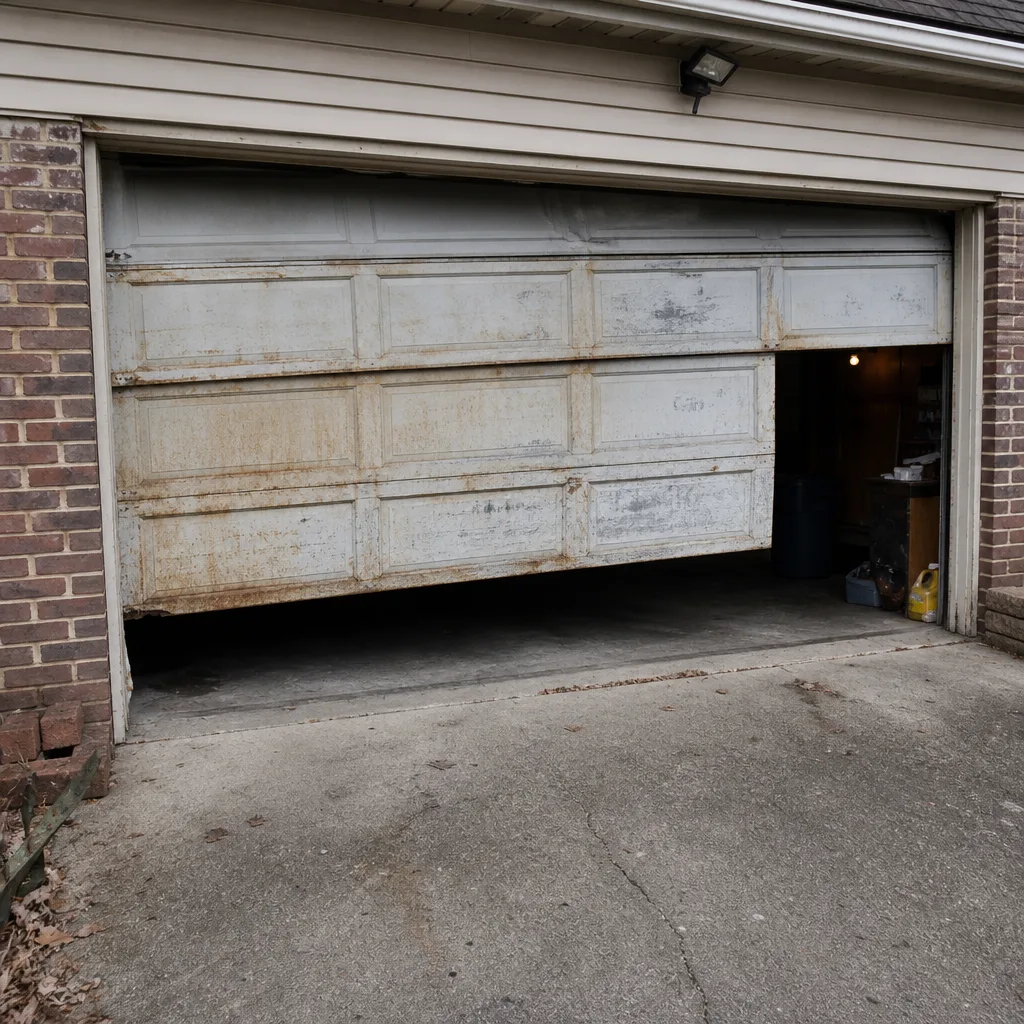 Before
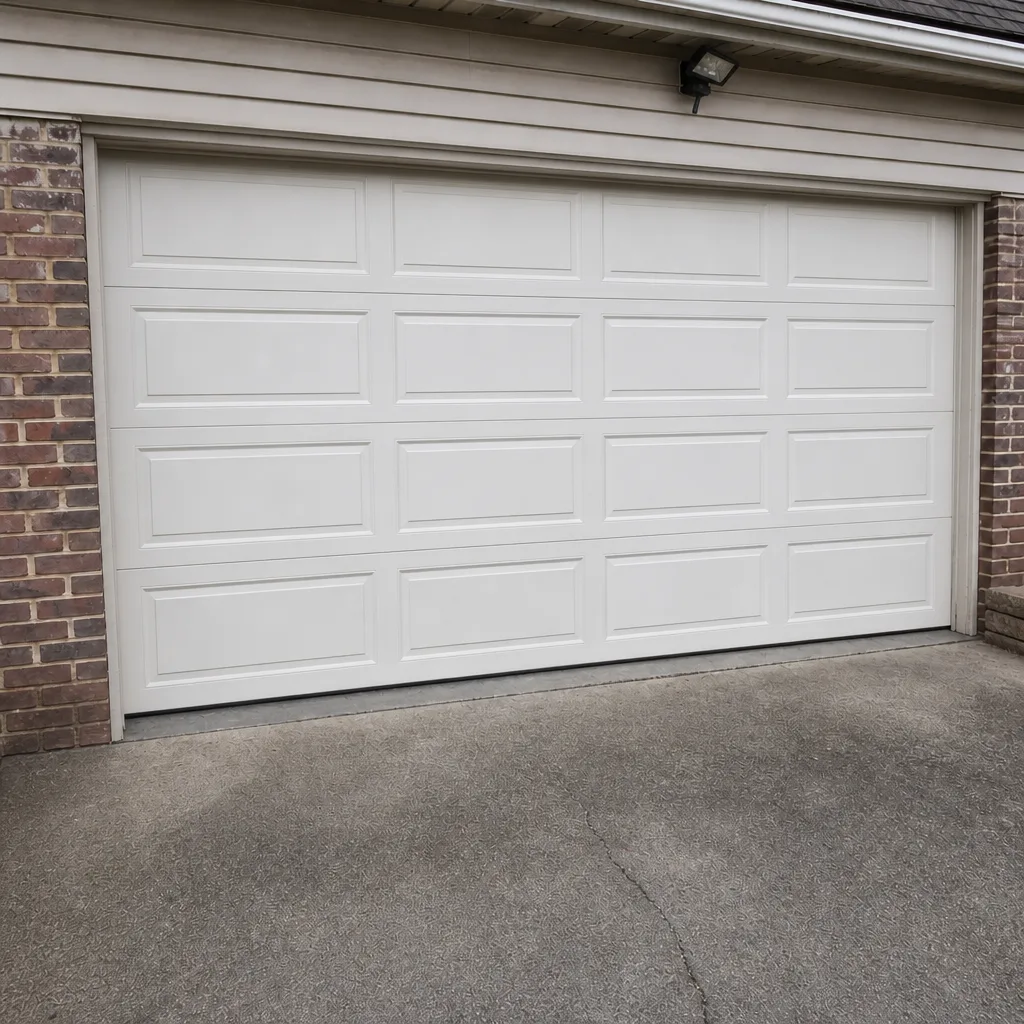 After
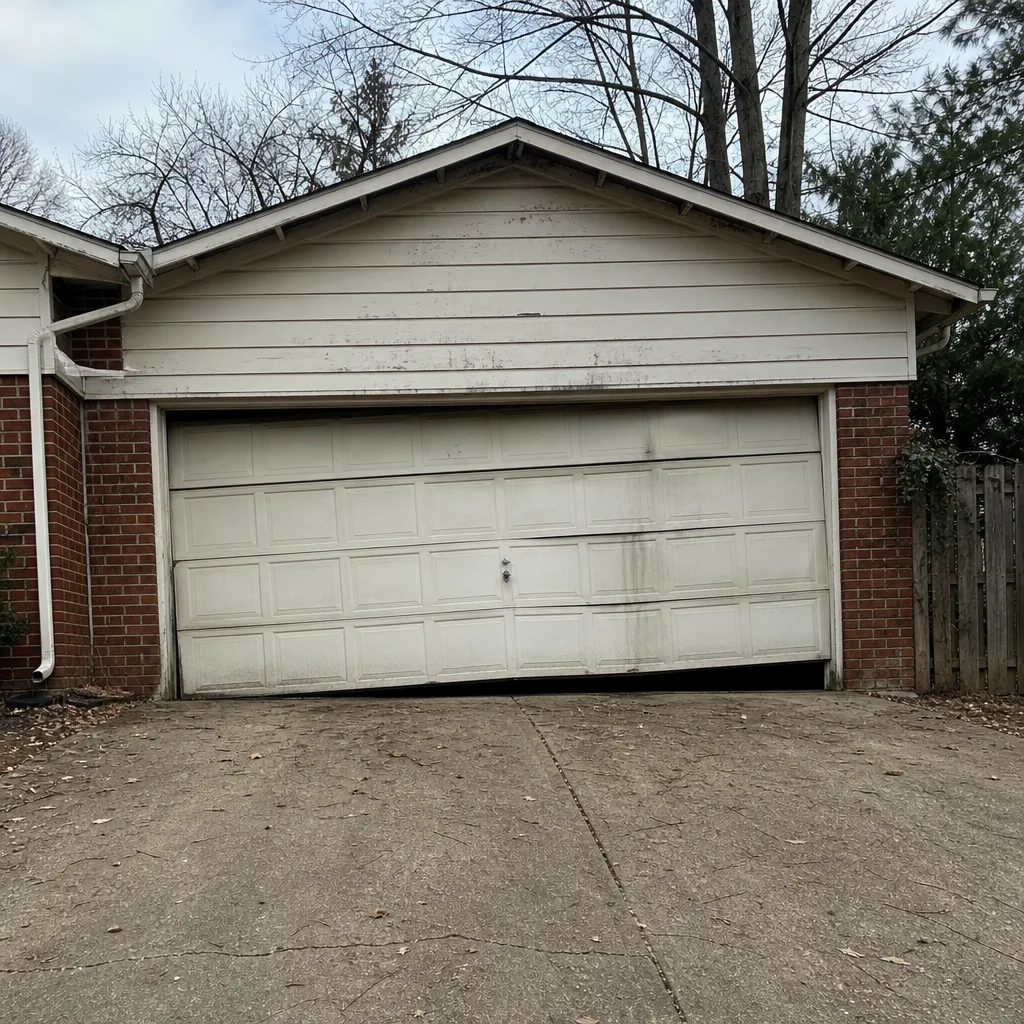 Before
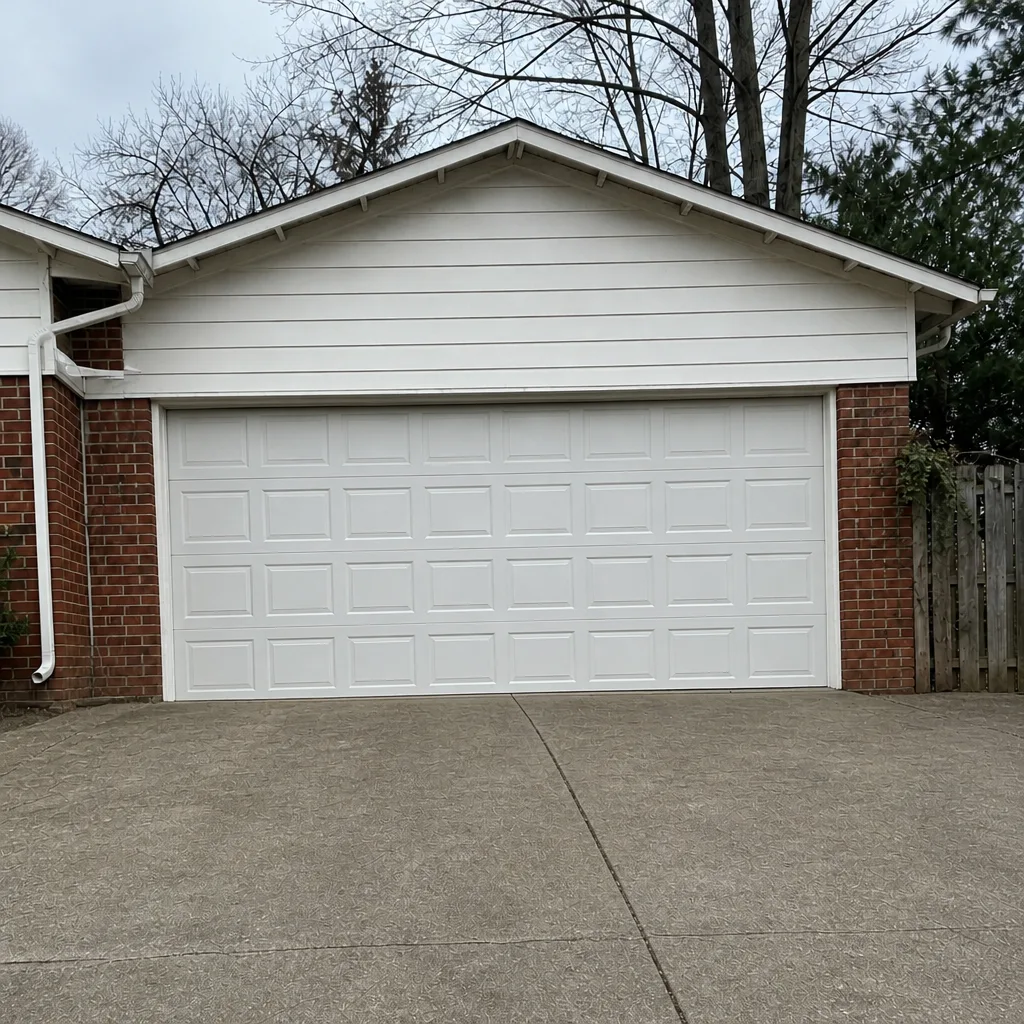 After
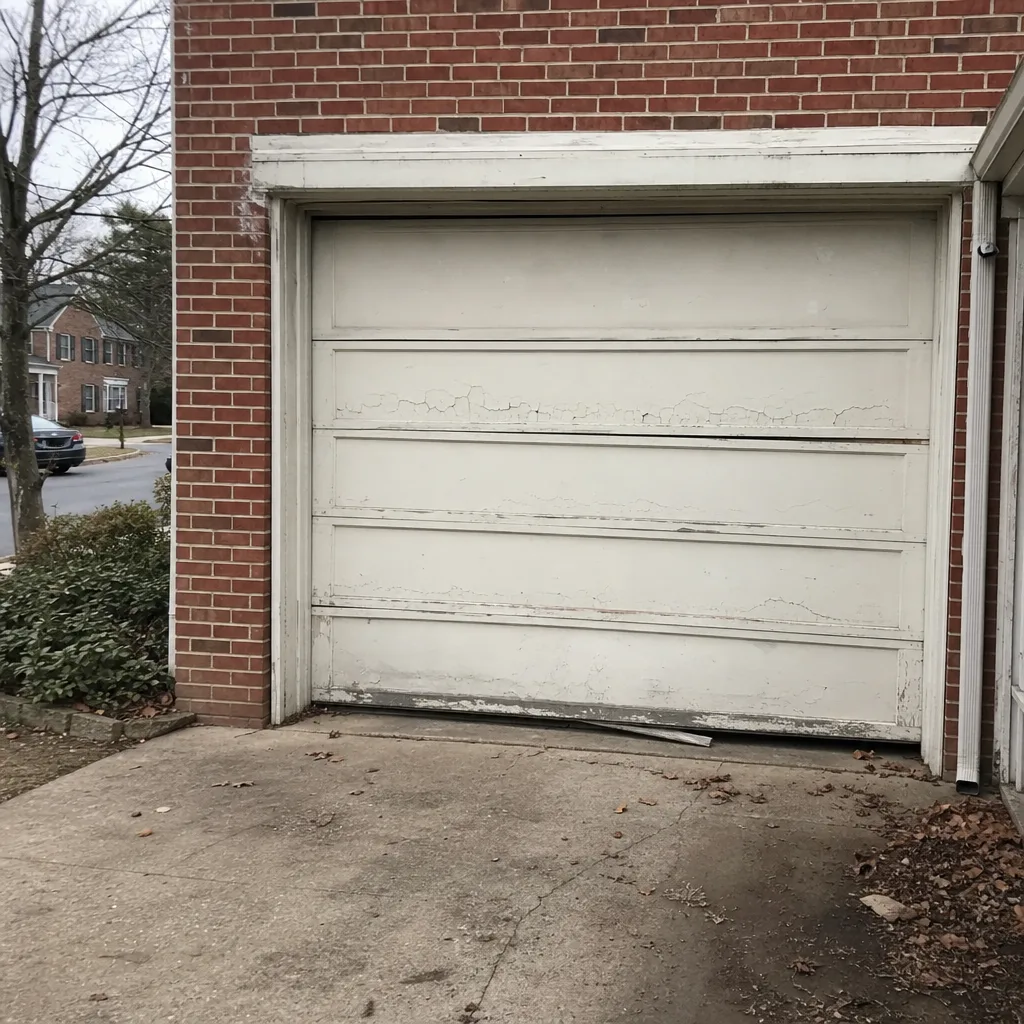 Before
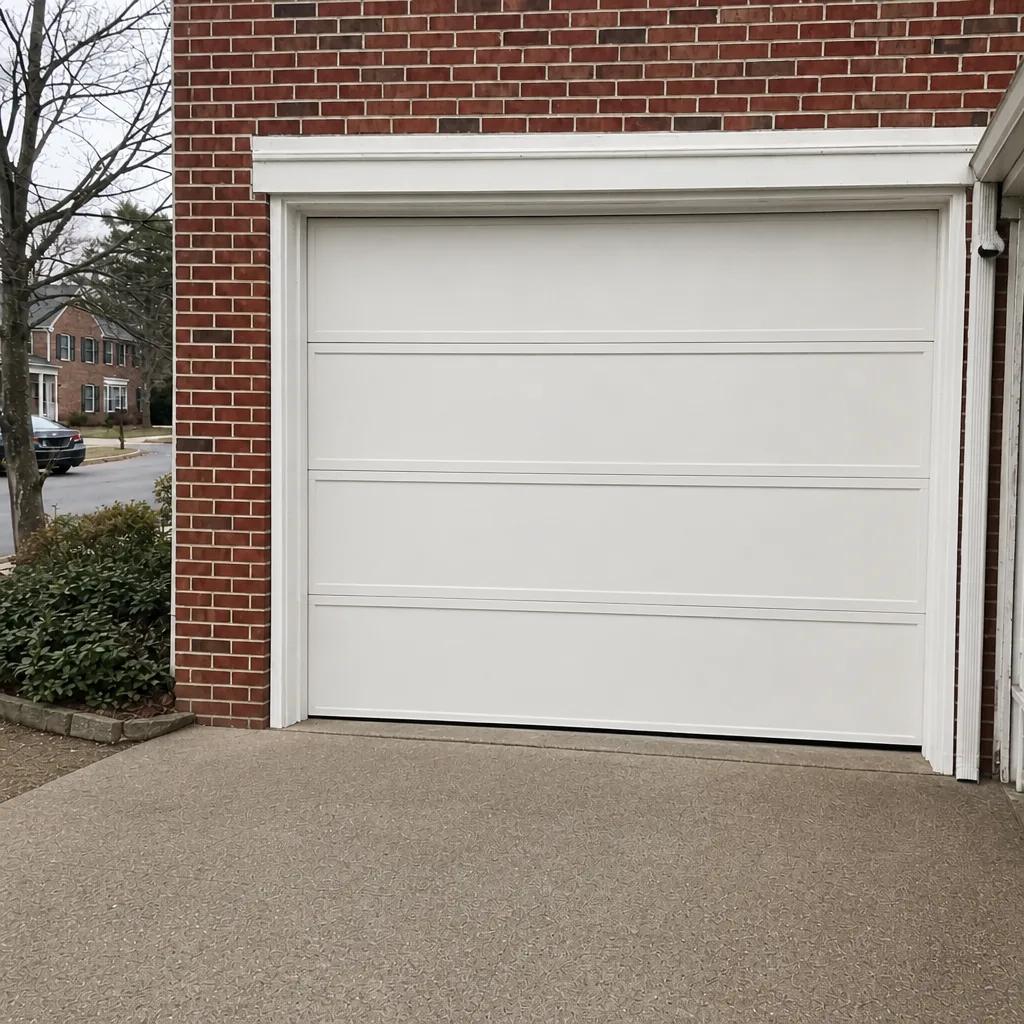 After
When to Call a Professional
Call a professional for any symptom that involves a spring, a cable, a track that’s come off the wall, an opener that needs opening, or a door that’s clearly off balance. Call for anything that’s already caused a fall or a near miss. And call if you’ve worked through the decision tree and the cause isn’t obvious – a technician with up to 12 years of experience can name the fault in a few minutes where an hour of DIY work might not.
Paragon Garage Door Repair offers free estimates in Alexandria – call (866) 812-5587. We answer 24/7. Fast dispatch from 7am to 7pm, Sunday through Friday. We’re closed Saturday. If the door fails outside dispatch hours, call and we’ll book you into the next opening. When we come out, the written estimate sets the final price, agreed before any work starts.
Frequently Asked Questions
It’s most often the gear and sprocket assembly inside the opener housing, or a dead trolley carriage, and the two are distinguished by releasing the carriage and testing each side separately. Release the trolley and run the opener; if the carriage runs along the rail, the door is the problem. If the opener hums without moving the carriage, the opener is the problem. Call (866) 812-5587 for an exact quote – estimates are free.
Typical repair costs in Alexandria run by job, quoted before any work begins; a written estimate sets the final price. Safety beam adjustments, roller replacements, and track realignments sit at the low end of the range, while spring replacement – one spring, not a pair – is a mid-range job, and a matched pair of springs roughly doubles that. Opener repairs depend on the brand and failure; a LiftMaster or Chamberlain gear-and-sprocket repair is a mid-range job, while a logic board is higher. Call (866) 812-5587 for an exact quote – estimates are free.
Same-day service is often available for repair calls in Alexandria, depending on the schedule and the type of failure. Fast dispatch runs from 7am to 7pm, Sunday through Friday, and we’re closed Saturday. A call outside those hours is booked into the next opening. Call (866) 812-5587 for an exact quote – estimates are free.
No – the written estimate is the price, and it’s agreed before any work starts. What can change is scope, and only if the technician finds a second issue that affects the repair. In that case, you’ll be told what it is and what it costs before anyone proceeds. Call (866) 812-5587 for an exact quote – estimates are free.
Yes, technicians are state-licensed, insured and bonded, and our technicians have up to 12 years of experience working across LiftMaster, Chamberlain, Genie, Clopay, Amarr, Wayne Dalton, Craftsman, and Raynor equipment. That range matters on a diagnostic call where the fault could sit in the door, the opener, or the connection between them. Call (866) 812-5587 for an exact quote – estimates are free.
No – a garage door with a broken torsion spring should not be lifted by hand, and the door should stay closed until a technician arrives. The door weight is far beyond what the frame and lifting hardware are designed to hold without spring assistance, and lifting can cause injury or a sudden drop. Call (866) 812-5587 for an exact quote – estimates are free.
The Bottom Line
Most garage door failures in Alexandria are diagnosable in under a minute if you know which questions to ask. Does the door move at all? Does the motor run? Does the carriage run with the trolley released? Those three checks split the likely causes by more than half and point to either the door, the opener, or the connection between them – which is exactly where a technician starts.
The rest is a matter of staying inside the safe zone. Sensors, remotes, obstructions, and switches are fair game. Springs, cables, and openers under power are not. And Alexandria’s clay-heavy soil adds a seasonal variable most troubleshooting guides ignore – a door that binds in a wet month may free itself in a dry one, which is a reason to look at the track and the balance before assuming the worst.
If you’ve worked the decision tree and want a trained set of eyes on it, call (866) 812-5587 for a free estimate. We work on what you already have, from the opener to the panel, and a repair-first diagnosis is what our standard is built on.
Contact
Ready to get your garage door working again or simply want a professional opinion before you spend anything? Paragon Garage Door Repair provides free estimates in Alexandria – call (866) 812-5587. We answer 24/7. Fast dispatch from 7am to 7pm, Sunday through Friday. Closed Saturday. Whether you need same-day repair, a diagnosis on an intermittent failure, or a written estimate on a replacement, the price is quoted and agreed before any work starts – and the technician who arrives already knows your brand.
Written by the team at Paragon Garage Door Repair.